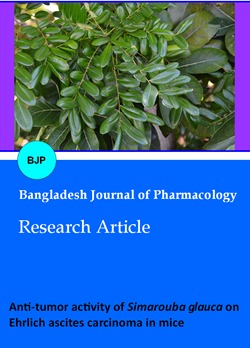
Anti-tumor activity of Simarouba glauca on Ehrlich ascites carcinoma in mice
Abstract
This study aimed to evaluate the anti-cancer potential of the ethanolic extract of Simarouba glauca leaf in Ehrlich ascites carcinoma-bearing Swiss albino mice. Ehrlich ascites carcinoma was induced by intraperitoneal injection of 1 × 10⁶ viable cells in each mouse. The extract (150 or 300 mg/kg) was administered as test, and standard drug 5-fluorouracil (20 mg/kg) as a positive control. Anti-tumor activity was assessed through changes in body weight, mean survival time, hematological parameters, hepatic glycoproteins, and antioxidant status. S. glauca extract significantly reduced tumor burden, improved mean survival time, normalized hemoglobin and erythrocyte counts, elevated antioxidant enzyme levels, and decreased liver glycoproteins. The 300 mg/kg dose showed superior efficacy compared to the lower dose and 5-fluorouracil. These findings suggest that S. glauca extract exhibits anti-tumor effects, likely mediated through antioxidant and immunomodulatory mechanisms.
Introduction
Cancer remains one of the foremost global health concerns, responsible for nearly 10 million deaths worldwide in 2022 alone (World Health Organization, 2022). Despite significant advancements in cancer therapeutics, including chemotherapy, radiotherapy, immunotherapy, and targeted therapies, these modalities often suffer from serious limitations such as non-specific cytotoxicity, adverse effects, high costs, and the eventual development of drug resistance (Zhao et al., 2021). These challenges have prompted the continuous search for alternative, safer, and cost-effective anti-cancer agents, especially those derived from natural sources with proven traditional uses and low toxicity profiles.
Many medicinal plants contain bioactive phytochemicals that give them strong anti-cancer effects. Catharanthus roseus is a notable example (Ahamad et al., 2010). It is a source of vincristine and vinblastine, which are commonly used to treat leukemia and lymphomas by inhibiting proliferation. Curcumin, which is present in Curcuma longa, is well-known for its pro-apoptotic and anti-inflammatory qualities against a range of cancer types (Agarwal et al., 2018; Ayushi et al., 2018). A powerful chemotherapy drug for ovarian and breast malignancies, paclitaxel is produced by Taxus brevifolia (Armstrong et al., 2006; Johnson et al., 1997). The epi-gallocatechin gallate found in Camellia sinensis inhibits oxidative stress and tumor formation (Singh et al., 2024; Neetu et al., 2024). Withania somnifera contains a substance called withaferin A, which inhibits the growth of cancer cells and causes apoptosis (Stan et al., 2008).
Nearly 60% of currently used chemotherapeutic agents are either natural products or their derivatives (Newman and Cragg, 2020).
Simarouba glauca DC., also called the paradise tree, is a tropical tree belonging to the family Simaroubaceae. Traditionally used in Ayurvedic and folk medicine, various parts of the plant have been reported to exhibit antimicrobial (Ramasamy et al., 2022), anti-inflammatory (Balu et al., 2020), antimalarial (Franssen et al., 1997), and anti-cancer properties (Gurudhathan et al., 2023).
Phytochemical studies of S. glauca have revealed the presence of numerous bioactive constituents, including quassinoids, triterpenoids, alkaloids, flavonoids, and limonoids (Polonsky et al., 1985; Chandel et al., 2021).
Although S. glauca has been traditionally recognized for its medicinal properties, including anti-cancer potential, scientific investigations have primarily focused on in vitro studies or preliminary screening on specific cell lines. However, the in vivo evaluation of its ethanolic extract in animal models, particularly in mice, remains largely unexplored.
Ehrlich ascites carcinoma is a relocatable, undifferentiated carcinoma which can be widely used as a model system for experimental tumors in mice. Its rapid growth rate, high transplantability, and similarity to human cancers in terms of biological behavior make it an excellent system for testing the in vivo efficacy of new anti-cancer agents (Rashid et al., 2022). Ehrlich ascites carcinoma-treated mice commonly manifest compromised survival, changed hematological values, oxidative stress, and liver impairment—characteristics of systemic tumor growth.
To determine the anti-cancer activity of the ethanolic extract of S. glauca in mice with Ehrlich ascites carcinoma, the present study was conducted.
Materials and Methods
Collection of plants
Fresh leaves of S. glauca were collected from Thanjavur district, authenticated the plant material with reference to Flora of the Presidency of Madras (Gamble, 2008), and confirmed by a botanist (Dr. N. Ravichandran, SASTRA University). A voucher specimen was prepared and deposited in the herbarium of the Department of CARISM, SASTRA Deemed to be University, Tamil Nadu, for future reference.
The collected leaves were thoroughly washed with tap water to remove surface debris and then shade-dried for 10 days at ambient temperature to preserve their phytoconstituents. The dried leaves were subsequently pulverized using an electrical blender to obtain coarse powder. The powdered material was stored at room temperature under dry and dark conditions until further use in extraction.
Preparation of ethanolic extract
A total of 250 g of the dried powder was subjected to extraction using ethanol (80%) as a solvent. The plant material was soaked in ethanol at room temperature (25 ± 2°C) for 72 hours with occasional stirring to facilitate the efficient extraction of phytoconstituents. The mixture was then filtered using Whatman filter paper 1 to separate the plant residue from the solvent extract. A dark green, semisolid residue was obtained by air drying the filtrate after it had been concentrated using a rotary evaporator (Buchi Rotavapor R-300, Switzerland) at low pressure.
Phytochemical screening
The preliminary phytochemical screening of the plant extract was estimated using the method reported elsewhere (Harborne, 1973).
To detect phenolic compounds, a few drops of plant extract were added to a test tube, and a few drops of 5% ferric chloride solution were added. The development of a dark green coloration confirmed the presence of phenolic compounds.
Flavonoids were identified using the lead acetate test. A few drops of the plant extract were added to a test tube, followed by the addition of 10% lead acetate solution. The formation of a yellow precipitate indicated the presence of flavonoids in the extract.
For glycosides identification, the plant extract was mixed with glacial acetic acid, followed by the addition of a few drops of ferric chloride solution. Concentrated sulfuric acid was then carefully added along the side of the test tube. The formation of a reddish-brown ring at the interface confirmed the presence of glycosides.
In the case of saponins, the plant extract was vigorously shaken with water in a test tube. The absence of stable foam formation indicated that saponins were not present in the sample.
For alkaloids, a few drops of the plant extract filtrate were placed in a test tube, and Wagner's reagent was carefully added along the sides. The formation of a reddish-brown precipitate indicated the presence of alkaloids in the sample.
The plant extract was mixed with chloroform, followed by the addition of a few drops of concentrated sulfuric acid. The mixture was shaken thoroughly. The appearance of a red color in the chloroform layer and greenish-yellow fluorescence in the acid layer confirmed the presence of steroids.
To identify tannins, the plant extract was treated with a ferric chloride solution (10%). The development of a blue-green coloration confirmed the presence of tannins.
For the determination of terpenoids, chloroform was added to the plant extract, followed by the careful addition of concentrated sulfuric acid along the inner wall of the test tube. The formation of a reddish-brown coloration at the interface confirmed the presence of terpenoids.
To observe anthraquinones, a few drops of the plant extract filtrate were treated with ammonia solution (10%) and shaken vigorously. The lack of pink, violet, or red coloration indicated the absence of anthraquinone glycosides in the extract.
Carbohydrates were detected using the Tollens' test (sil-ver mirror test). Tollens' reagent was added to the plant extract. The formation of a silver mirror on the inner surface of the test tube confirmed the presence of carbohydrates.
Experimental animal
Swiss albino mice (either sex, weighing 20-25 g) were procured from Biogen Laboratory, India. The animals were housed under standard laboratory conditions and were acclimatized for 10 days before the commencement of the experiment. They were placed in sterile bedding-equipped polypropylene cages during this time, fed a regular pellet diet (Sai Durga Feeds, India), and given water ad libitum. The animal housing facility was in a controlled environment with a 12-hour light/dark cycle, a temperature of 25 ± 2°C, and a relative humidity of 45–55%.
Ehrlich ascites carcinoma model
When implanted intraperitoneally, Ehrlich ascites carcinoma cells stimulate intense local inflammation with increased vascular permeability, enormous edema formation, cell infiltration, and gradual accumulation of ascitic fluid. This ascitic fluid is important in tumor growth, acting as a nutritional medium directly for the survival and proliferation of cancer cells (Rosa et al., 2002; Nair et al., 2015). The Amla Cancer Research Centre at Thrissur, Kerala, India, supplied the Ehrlich ascites carcinoma cells employed in this study. The tumor line was perpetuated in vivo by bi-weekly intraperitoneal transplantation of 1 × 10⁶ viable Ehrlich ascites carcinoma cells per mouse. This ensured the reproducibility, viability, and tumorigenic capacity of the cells used for experimental induction. The study focused on critical parameters, including body weight, survival time, hematological indices, hepatic glycoprotein levels, and the activity of both enzymatic and non-enzymatic antioxidants. The impact of S. glauca extract was compared to the effects of the control chemotherapeutic drug (5-fluorouracil).
Experimental design
The animals were divided into five groups, each comprising six mice. One group was considered a normal control (no tumor inoculation). The second group received Ehrlich ascites carcinoma cells by injection, but no therapy. The third and fourth groups received Ehrlich ascites carcinoma cells and extract of S. glauca (150 or 300 mg/kg) orally for 14 days. The last group received Ehrlich ascites carcinoma cells and 5-fluorouracil (20 mg/kg) intraperitoneally for 14 days.
Except for the first group, all other groups were inoculated intraperitoneally with 1 × 10⁶ Ehrlich ascites carcinoma cells two days before the initiation of treatment. At the end of the experimental period, ascitic fluid was aspirated from the peritoneal cavity of tumor-bearing mice for tumor burden analysis.
Following that, the animals were gently killed by cervical decapitation. Blood (0.2 to 0.3 mL) was collected via retro-orbital puncture and used for various hematological and biochemical analyses. Liver tissues were carefully excised, rinsed in ice-cold saline to remove blood and debris, and immediately processed. The cleaned liver was homogenized in 0.1M phosphate buffer at pH 7.4 to prepare tissue homogenates, which were subsequently used for the assessment of antioxi-dant enzyme activities and glycoprotein content (Ramasamy et al., 2020).
Survival time
The anti-tumor efficacy of the treatments was further evaluated by calculating the percentage increase in the lifespan of tumor-bearing mice using the formula:
Mean survival time of treated group
= [ ----------------------------------------------------- - 1 ] x 100
Mean survival time of control group
The survival time of the experimental animals was monitored daily throughout the study period. Mean survival time was calculated for each group using the formula:
Day of first death + Day of last death
= -------------------------------------------------------
2
Significant anti-cancer activity is often indicated by an increase in lifespan of greater than 25%. In comparison to untreated tumor controls, the survival statistics shed light on the possible therapeutic benefits of the extract in extending the lifespan of Ehrlich ascites carcinoma-bearing mice.
Tumor growth response
Tumor volume estimation
The mice were killed at the end of the experiment, and a sterile syringe was used to aspirate the ascitic fluid carefully from the peritoneal cavity. The volume of collected ascitic fluid, indicative of tumor burden, was measured directly. To determine the packed cell volume, the ascitic fluid was transferred into a graduated centrifuge tube and centrifuged at 1,000 rpm for 5 min. The volume of the sedimented cells was recorded as the tumor volume (Dhanabalan and Seenivasan, 2022).
Tumor cell count
For tumor cell enumeration, a small aliquot of ascitic fluid was drawn into a WBC pipette and diluted 100-fold using Turk's solution (WBC diluting fluid). A droplet of the diluted suspension was placed on a clean hemocytometer, and tumor cells were counted under a light microscope in 64 small squares of the counting chamber. The total number of viable tumor cells per milliliter of ascitic fluid was calculated and expressed accordingly (Ramasamy et al., 2020).
Viable and non-viable tumor cell count: Using a WBC pipette, a portion of the ascites was extracted and diluted 100-fold with phosphate-buffered saline. After combining the diluted cell suspension with trypan blue dye (0.4%) in a 1:1 ratio, the mixture was allowed to sit at room temperature for 2-3 min. A drop of the stained suspension was placed on a hemocytometer, and the cells were viewed via a light microscope. Viable cells
excluded the dye and appeared bright and refractile, whereas the dye was absorbed by non-viable (dead) cells, which turned blue (Dhanabalan and Seenivasan, 2022). The number of viable and non-viable cells was counted in the prescribed area of the chamber, and cell viability was expressed as a percentage of total cells:
No. of cells x Dilution
= -----------------------------------------------
Area x Thickness of liquid film
Hematological studies
The collected blood was transferred into EDTA-coated tubes to prevent coagulation. Hematological parameters, including erythrocyte count, leucocyte count, and hemoglobin concentration, were determined using recognized laboratory practices. These hematological parameters were evaluated to assess the extent of tumor-induced hematological alterations and the protective effect of the plant extract or standard drug on the blood profile of tumor-bearing mice (Dacie and Lewis, 2011).
Antioxidants
Antioxidant parameters were determined using liver homogenates from experimental animals. The liver tissues, after removal, were homogenized in 0.1M phosphate buffer, pH 7.4, and washed in ice-cold saline. Antioxidant enzymes and oxidative stress markers were estimated in the clear supernatant after centrifugation of the homogenates at 10,000 rpm for 15 min at 4°C. The enzymatic antioxidants analyzed were superoxide dismutase and catalase, whereas reduced glutathione and lipid peroxidation were quantified as markers of non-enzymatic antioxidant activity and oxidative damage, respectively (Fridovich, 1995). The hydrogen peroxide degradation rate at 240 nm was used to estimate catalase activity.
The ability of superoxide dismutase to inhibit pyrogallol autoxidation was employed to estimate its activity. Thiobarbituric acid reactive compounds analysis was employed to estimate malondialdehyde content to assess lipid peroxidation. Ellman's reagent, which reacts with free thiol groups to form a yellow complex, was used to measure the reduced glutathione content. These biochemical tests gave information regarding the redox status of hepatic tissues and the antioxidant role of the plant extract against Ehrlich ascites carcinoma-induced oxidative stress (Sinha, 1972).
Hepatic marker enzymes
To determine liver function and tissue damage in Ehrlich ascites carcinoma-bearing mice, enzymatic and non-enzymatic hepatic markers were estimated from serum samples. After blood withdrawal, serum was separated by centrifugation for 15 min at 3,000 rpm and stored at -20°C. The activity of aspartate aminotransferase and alanine aminotransferase was measured for hepatocellular integrity. These enzymes are released into the circulation when liver cells are injured or inflamed. Lactate dehydrogenase was quantified as a measure of tissue damage and tumor-induced metabolic stress.
Total protein concentration was determined to evaluate hepatic synthetic capacity, since reduced serum protein concentration is commonly seen with deranged liver function and tumors. These assays were done using standard colorimetric procedures and commercially available diagnostic kits.
These hepatic indicators are useful for the determination of Ehrlich ascites carcinoma-induced hepatic damage and the hepatoprotective effect of S. glauca extract (Ramasamy et al., 2020).
Hepatic glycoproteins
To assess biochemical changes related to tumor growth and the effectiveness of treatment, hepatic glycoprotein levels (hexose, hexosamine, and fucose) were estimated in liver tissue homogenates. Liver tissues were removed, washed with ice-cold saline to eliminate blood traces, and homogenized in 0.1M phosphate buffer at pH 7.4. Upon centrifugation of the homogenates for 15 min at 4°C at 10,000 rpm, the supernatant was used for biochemical calculations.
Total hexose content was measured according to the phenol-sulfuric acid method, whereas carbohydrate residues were detected by a spectrophotometer. Hexosamine was estimated by acetylation followed by color development using Ehrlich's reagent, which detects amino sugars. Fucose content was quantified by cysteine-sulfuric acid method, where fucose reacts to form a colored complex measurable at 396 and 430 nm respectively (Sheikh and Sarker, 2021).
Statistical analysis
Results were expressed as the mean ± SD for six mice in each group. Statistical analysis was carried out using one-way ANOVA. The results from the experimental groups were compared with respective controls, and the p-value <0.05 was considered statistically significant.
Results
Approximately 250 g of powdered S. glauca leaves were extracted using 80% ethanol. The extract was concentrated using a rotary evaporator, yielding approximately 30 g (12%) of dried ethanolic extract.
Phytochemical analysis
The phytochemical screening of the extract showed phenols, flavonoids, glycosides, alkaloids, steroids, tannins, terpenoids, and carbohydrates, while saponins and anthraquinones were absent (data are not shown).
Tumor growth response
The impact of the ethanolic extract of S. glauca on tumor progression was assessed by tumor volume and the number of viable and non-viable cells in Ehrlich ascites carcinoma-bearing mice (Table I). In the Ehrlich ascites carcinoma group, a significant increase in tumor volume (5.4 ± 0.2 mL) and viable cell count (7.3 ± 0.2 × 10⁶ cells/mL) was observed, along with a relatively low number of non-viable cells (1.8 ± 0.1 × 10⁶ cells/mL), indicating aggressive tumor proliferation. Treatment with S. glauca extract at 150 mg/kg resulted in a moderate reduction in tumor volume (3.5 ± 0.2 mL) and viable cell count (5.5 ± 0.2 × 10⁶ cells/mL), accompanied by a corresponding increase in non-viable cells (3.3 ± 0.2 × 10⁶ cells/mL), suggesting cytotoxic activity of the extract. At a dose of 300 mg/kg, S. glauca extract demonstrated a more pronounced anti-tumor effect, as evidenced by a further reduction in tumor volume (2.5 ± 0.1 mL) and viable cells (2.9 ± 0.2 × 10⁶ cells/mL), along with a substantial increase in non-viable cells (5.4 ± 0.2 × 10⁶ cells/mL). The 5-fluorouracil-treated (20 mg/kg) mice showed a significant tumor suppression, with minimal tumor volume (1.6 ± 0.2 mL), lowest viable cell count (2.5 ± 0.2 × 10⁶ cells/mL), and highest non-viable cell count (6.1 ± 0.2 × 10⁶ cells/mL).
Table I: In vivo anti-tumor, hematological, antioxidant, hepatoprotective, glycoprotein-modulatory, and survival effects of Simarouba glauca leaf extract in Ehrlich ascites carcinoma-bearing mice
| Normal control | EAC-induced group | EAC-treated plus | F-value | p-value | |||
|---|---|---|---|---|---|---|---|
| Extract (150 mg/kg) | Extract (300 mg/kg) | 5-FU (20 mg/kg) | |||||
| Tumor growth response | |||||||
| Tumor volume (mL) | - | 5.4 ± 0.2 | 3.5 ± 0.2b | 2.5 ± 0.1b | 1.6 ± 0.2b | 185.1 | p<0.0001 |
| Viable cell (x10⁶ cells/mL) | - | 7.3 ± 0.2 | 5.5 ± 0.2b | 2.9 ± 0.2b | 2.5 ± 0.2b | 89.5 | p<0.0001 |
| Non-viable cells (x10⁶ cells/mL) | - | 1.8 ± 0.1 | 3.3 ± 0.2b | 5.4 ± 0.2b | 6.1 ± 0.2b | 247.0 | p<0.0001 |
| Survival time and lifespan | |||||||
| Mean survival time (days) | - | 15.3 ± 1.2 | 22.7 ± 1.2b | 27.0 ± 0.8b | 32.3 ± 2.0b | 287.6 | p<0.0001 |
| %Increase in lifespan | - | - | 47.8a | 76.1a | 86.7 | 18.3 | p<0.001 |
| Hematological parameters | |||||||
| Hemoglobin (g%) | 12.3 ± 0.2 | 6.2 ± 0.1a | 7.9 ± 0.1a | 10.2 ± 0.0a | 11.7 ± 0.1a | 2947.6 | p<0.001 |
| Erythrocyte (x10⁶ cells/mm³) | 5.2 ± 0.1 | 3.2 ± 0.1a | 4.3 ± 0.1a | 4.7 ± 0.1a | 4.9 ± 0.1a | 310.9 | p<0.001 |
| Leucocyte (x10⁶ cells/mm³) | 7.5 ± 0.2 | 15.2 ± 0.2a | 12.5 ± 0.3a | 9.6 ± 0.2a | 8.3 ± 0.2a | 1187.7 | p<0.001 |
| Hepatic marker enzymes | |||||||
| Alanine aminotransferase (U/L) | 62.4 ± 1.5 | 306.3 ± 0.2a | 254.3 ± 2.3a | 159.7 ± 0.2a | 109.5 ± 0.4a | 46435.8 | p<0.001 |
| Aspartate aminotransferase (U/L) | 88.0 ± 3.1 | 394.9 ± 3.0a | 284.9 ± 2.5a | 152.6 ± 1.3a | 108.4 ± 1.2a | 6561.3 | p<0.001 |
| Lactate dehydrogenase (U/L) | 673.6 ± 6.3 | 2623.5 ± 22.4a | 1655.5 ± 12.0a | 827.1 ± 12.0a | 766.0 ± 14.1a | 6862.1 | p<0.001 |
| Serum protein (g/dL) | 5.1 ± 0.1 | 3.3 ± 0.1a | 4.0 ± 0.4a | 4.6 ± 0.1a | 4.7 ± 0.1a | 71.9 | p<0.001 |
| Antioxidants | |||||||
| Lipid peroxidation (ng/g) | 15.4 ± 0.3 | 28.3 ± 0.1a | 25.3 ± 0.3a | 22.2 ± 0.1a | 18.3 ±0.3a | 1615.0 | p<0.001 |
| Reduced GSH (µmole/g) | 27.4 ± 0.1 | 17.7 ± 0.3a | 19.5 ± 0.0a | 26.1 ± 0.1a | 26.6 ± 0.2a | 3779.8 | p<0.001 |
| Superoxide dismutase (mg of adrenochrome/g) | 37.1 ± 0.1 | 12.4 ± 0.1a | 19.0 ± 0.1a | 30.9 ± 0.3a | 35.5 ± 0.2a | 5480.2 | p<0.001 |
| Catalase (mg/min/g tissue) | 339.1 ± 11.7 | 123.1 ± 4.5a | 184.1 ± 3.3a | 259.4 ± 8.1a | 277.4 ± 3.3a | 292.6 | p<0.001 |
| Hepatic glycoproteins | |||||||
| Hexose (mg/g) | 1.9 ± 0.3 | 4.6 ± 0.3b | 3.7 ± 0.3b | 3.1 ± 0.5b | 2.7 ± 0.2b | 43.0 | p<0.0001 |
| Hexosamine (mg/g) | 2.5 ± 0.3 | 5.9 ± 0.2b | 5.1 ± 0.1b | 4.2 ± 0.3b | 3.0 ± 0.1b | 86.1 | p<0.0001 |
| Fucose (mg/g) | 3.6 ± 0.3 | 11.5 ± 0.4b | 6.3 ± 0.2b | 4.9 ± 0.4b | 3.6 ± 0.0b | 277.0 | p<0.0001 |
| Data are mean ± SD; EAC (Ehrlich ascites carcinoma) group; 5-FU (5-fluorouracil); Groups compared: Normal control Vs EAC induced group, EAC-induced group Vs EAC-treated + extract at 150 mg/kg, 300 mg/kg, and 5FU at 20 mg/kg | |||||||
Survival time and lifespan
An effective anti-tumor treatment is expected to prolong survival and delay mortality in tumor-bearing animals. Ehrlich ascites carcinoma-treated mice exhibited a significantly reduced mean survival time of 15.3 ± 1.2 days, indicating rapid tumor progression and host mortality. In contrast, treatment with S. glauca extract significantly prolonged survival in a dose-dependent manner. Mice treated with extract (150 mg/kg) showed a mean survival time of 22.7 ± 1.2 days and an increased lifespan of 47.8%, while extract (300 mg/kg) exhibited a 27 ± 0.8 days mean survival time with a 76.1% increase in lifespan. The most notable effect was observed in the 5-fluorouracil-treated group, with a mean survival time of 32.3 ± 2.0 days and a corresponding increase in lifespan of 86.7%.
Hematological parameters
In the Ehrlich ascites carcinoma group, there was a marked reduction in hemoglobin concentration (6.2 ± 0.1 g%), and erythrocyte count (3.2 ± 0.1 × 10⁶ cells/mm³) compared to the normal control (hemoglobin – 12.3 ± 0.2 g%, erythrocyte – 5.2 ± 0.0 × 10⁶ cells/mm³). Additionally, an increase in leucocyte count was noted in Ehrlich ascites carcinoma-treated mice (15.2 ± 0.2 × 10⁶ cells/mm³), indicating tumor-induced leucocytosis. Treatment with S. glauca extract led to a dose-dependent improvement in hematological parameters. S. glauca extract (150 mg/kg) showed moderate restoration of hemoglobin (7.9 ± 0.1 g%), erythrocyte (4.3 ± 0.1 × 10⁶ cells/mm³), and a decrease in leucocyte (12.5 ± 0.3 × 10⁶ cells/mm³). Extract (300 mg/kg) or 5-fluorouracil (20 mg/kg) showed near-normal values. 5-Fluorouracil group recorded hemoglobin of 11.7 ± 0.08 g%, erythrocyte of 4.9 ± 0.1 × 10⁶ cells/mm³, and leucocyte of 8.3 ± 0.2 × 10⁶ cells/mm³, indicating significant hematological recovery.
Antioxidants
The Ehrlich ascites carcinoma group exhibited a significantly elevated lipid peroxidation level (28.3 ± 0.1 ng/g), compared to the normal control (15.4 ± 0.3 ng/g), indicating increased oxidative damage due to tumor burden. Concurrently, the antioxidant defences were markedly depleted in the Ehrlich ascites carcinoma-bearing mice, as evidenced by a decrease in reduced GSH (17.7 ± 0.3 µmol/g), superoxide dismutase (12.4 ± 0.1 µg/g), and catalase (123.1 ± 4.5 mg/min/g).
Treatment with the extract resulted in a dose-dependent improvement in oxidative stress parameters. S. glauca extract (300 mg/kg) showed near-normalization of lipid peroxidation levels (18.3 ± 0.3 ng/g), along with significant restoration of antioxidant enzyme activities: GSH (26.61 ± 0.15 µmole/g), superoxide dismutase (35.5 ± 0.2 µg/g), and catalase (277.4 ± 3.3 mg/min/g). These values closely approximate those of the normal control, suggesting a potent antioxidant effect of S. glauca extract.
Hepatic marker enzymes
In this study, Ehrlich ascites carcinoma-bearing mice demonstrated a marked increase in serum alanine aminotransferase (306.3 ± 0.2 U/L), aspartate amino-transferase (394.9 ± 3.0 U/L), and lactate dehydrogenase (2623.5 ± 22.4 U/L) levels compared to the normal group which recorded values of 62.4 ± 1.5 U/L, 88.0 ± 3.1 U/L, and 673.6 ± 6.3 U/L, respectively. This substantial elevation in hepatic marker enzymes indicates hepatocellular injury and membrane leakage induced by tumor burden. In parallel, there was a significant decrease in total serum protein in the Ehrlich ascites carcinoma control (3.3 ± 0.1 g/dL), suggesting impaired protein synthesis, possibly due to hepatic dysfunction or increased catabolism by tumor cells. Treatment
with S. glauca extract demonstrated a dose-dependent hepatoprotective effect. S. glauca extract (300 mg/kg) showed alanine aminotransferase (109.5 ± 0.4 U/L), aspartate aminotransferase (108.4 ± 1.2 U/L), and lactate dehydrogenase (766.0 ± 14.1 U/L) levels significantly closer to those of the normal group, indicating restoration of liver integrity and reduced tumor-induced damage. Serum protein levels were also improved in S. glauca extract-treated groups (300 mg/kg), reaching 4.7 ± 0.1 g/dL, approaching normal values.
Hepatic glycoproteins
In the Ehrlich ascites carcinoma group, there was a significant increase in hepatic glycoprotein content, with hexose (4.6 ± 0.3 mg/g), hexosamine (5.9 ± 0.2 mg/g), and fucose (11.5 ± 0.4 mg/g) levels markedly elevated compared to the normal group, which recorded 1.9 ± 0.3, 2.5 ± 0.3, and 3.6 ± 0.3 mg/g, respectively. These results indicate heightened glycoprotein synthesis, which correlates with malignant transformation and tumor proliferation. Treatment with extract resulted in a dose-dependent normalization of glycoprotein levels. S. glauca extract (300 mg/kg) showed values approaching normal: hexose (2.7 ± 0.2 mg/g), hexosamine (3.0 ± 0.1 mg/g), and fucose (3.6 ± 0.0 mg/g).
Discussion
The present study highlights the anti-cancer potential of S. glauca leaf extract in Ehrlich ascites carcinoma-bearing mice. The extract demonstrated a range of therapeutic effects, including significant tumor growth inhibition, increased survival time, and restoration of key hematological and biochemical parameters.
Numerous naturally occurring phytochemicals have demonstrated anti-cancer properties via different routes. Curcumin (polyphenol), which comes from the plant Curcuma longa (turmeric), is well-known for its ability to cause apoptosis and inhibit key signaling pathways like NF-κB, STAT3, and COX-2. A promising effect was found in the treatment of several malignancies (breast, colon, pancreas, and prostate) (Aggarwal et al., 2003). Resveratrol (polyphenol), which is present in red wine, berries, and grapes, promotes the death of cancer cells and prevents tumor angiogenesis and spread (Jang et al., 1997). Quercetin (flavonoid), which is found in berries, onions, and apples, has been shown to have anti-prostate, anti-lung, and anti-colon cancer properties by inducing apoptosis and cell cycle arrest (Russo et al., 2012). Soy-derived substance, genistein (isoflavone), protects against breast, prostate, and colon cancers by controlling estrogen receptors and blocking tyrosine kinases (Banerjee et al., 2008). Berberine, an isoquinoline alkaloid derived from the Berberis species, has demonstrated effectiveness in treating gastric, breast, and liver cancers by suppressing the PI3K/Akt and Wnt/β-catenin pathways, which in turn prevent cell proliferation (Patil et al., 2010). Lycopene (carotenoid), which is found in large quantities in tomatoes and watermelons, is a potent antioxidant that lowers the risk of stomach, lung, and prostate cancers by blocking IGF-1 signaling (Giovannucci, 1999).
Oxidative stress plays a pivotal role in tumor progression and the pathophysiology of cancer (Wang et al., 2025). Lipid peroxidation is a hallmark indicator of oxidative damage, whereas the main defense systems of cells are antioxidants such as reduced glutathione, superoxide dismutase, and catalase (Asatiani et al., 2025). Notably, S. glauca treatment led to a marked reduction in lipid peroxidation levels and a concurrent increase in endogenous antioxidant enzyme activities (SOD, CAT, and GSH), suggesting the extract's capacity to mitigate oxidative stress, a key factor in tumor progression. The antioxidant properties observed in this study are consistent with a study, where the extract showed high free radical scavenging activity owing to its rich content of phenolics and flavonoids (Kumar et al. 2010).
Hepatic marker enzymes such as alanine and aspartate aminotransferase, and lactate dehydrogenase are sensitive indicators of liver function and cellular integrity. Elevated levels of these enzymes in the bloodstream are commonly associated with hepatic damage, often resulting from tumor progression or chemical insult. There is normalization of liver function markers and hematological parameters in tumor-bearing mice treated with herbal extracts including S. glauca, Azadirachta indica, and Tinospora cordifolia (Bala et al., 2011; Sinha et al., 2004).
Serum total protein level, on the other hand, reflects the synthetic function of the liver and overall health status.
Glycoproteins are key macromolecules involved in cell signaling, adhesion, and immune responses. Their levels are often significantly altered in pathological sta-tes such as cancer, where abnormal glycosylation and enhanced synthesis reflect tumor progression and metastatic potential. The principal components evaluated in this study are hexose, hexosamine, and fucose, which are commonly elevated in cancer due to increased turnover of glycoproteins and abnormal glycosylation pathways. The extract also normalized elevated liver enzy-mes (serum aminotransferases, lactate dehydrogenase), restored hematological parameters (hemoglobin, ery-throcyte, leucocyte), and significantly reduced elevated glycoprotein components such as hexose, hexosamine, and fucose, indicating a systemic restoration of physiological homeostasis. These findings confirm the multitargeted therapeutic action of S. glauca, likely through modulation of redox status, immune function, and metabolic pathways. When compared to previously published studies, the findings of the present investigation align well with existing literature. Similar tumor-regressive effects of S. glauca in Ehrlich ascites carcinoma models, with evidence of apoptosis induction attributed to its phytochemical constituents (Biba et al., 2021).
The observed reduction in glycoproteins—biomarkers often associated with cancer progression and metastasis—supports the findings of Gerber-Lemaire and Juillerat-Jeanneret, (2006), who reported that phytochemicals in medicinal plants can modulate glycosylation pathways and suppress tumor-associated metabolic disruptions.
Furthermore, the increase in mean survival time and percentage increase in lifespan in this study exceeds the 25% threshold defined elsewhere (Mahesh et al., 2021) for effective anti-cancer agents, thereby underscoring the potential of S. glauca as a significant therapeutic candidate.
The observed pharmacological effects of S. glauca extract can be explained by the combined and possibly synergistic activity of its diverse phytochemical constituents. Flavonoids and polyphenols contribute prominently to the observed antioxidant effects by directly scavenging reactive oxygen species (ROS) and enhancing the activity of endogenous antioxidant enzymes such as SOD, CAT, and GSH. Alkaloids, which are known to interfere with DNA and protein synthesis, may underlie the observed cytotoxicity and tumor regression. The normalization of liver function enzymes may be attributed to the hepatoprotective actions of ter-penoids and flavonoids, which stabilize cellular membranes and reduce oxidative insult to hepatocytes. The extract's ability to restore hematological values suggests protection of bone marrow function or a mitigation of tumor-induced myelosuppression. The reduction in glycoprotein components such as fucose, hexose, and hexosamine implies that the extract may downregulate glycosylation enzymes or inhibit tumor-driven glycoprotein synthesis, processes often linked with metastasis and immune evasion. These biochemical and histological alterations collectively reflect the extract's ability to reduce tumor burden, restore organ function, and improve overall systemic health, thereby extending survival. The multi-targeted action of S. glauca, encompassing antioxidant defence, cytoprotection, immunomodulation, and antiproliferative activity, supports its potential application as an adjunct or alternative therapy in cancer management.
This study has certain limitations. It was carried out on a single tumor model (EAC), which may not fully represent the complexity of other tumor types. Secondly, only two different concentrations of extract were tested. Leaving the optimal therapeutic window and dose-response relationship unexplored. In addition, the study did not include detailed phytochemical profiling or identification of active constituents responsible for the observed effects. It also lacks cancer gene expression studies, which limits understanding of the precise mechanisms of action.
Conclusion
The current study demonstrates the anti-tumor effects of ethanolic extract of S. glauca in Ehrlich ascites carcinoma-bearing mice, showing dose-dependent inhibition of tumor growth, normalization of glycoprotein levels, restoration of hematological and hepatic parameters, and improved antioxidant defense. With its cytotoxic, hepatoprotective, antioxidant, and anti-metastatic qualities, S. glauca extract, which is abundant in bioactive phytochemicals, appears to have great potential as a natural anti-cancer drug.
Ethical Issue
The Institutional Animal Ethics Committee (IAEC) authorised all animal-based experimental methods under protocol number SAC/IAEC/BS/2016/MSc002 and in compliance with institutional ethical principles.
References
Agarwal A, Kasinathan A, Ganesan R, Balasubramanian A, Bhaskaran J, Suresh S, Srinivasan R, Aravind KB, Sivalingam N. Curcumin induces apoptosis and cell cycle arrest via the activation of reactive oxygen species–independent mitochondrial apoptotic pathway in Smad4 and p53 mutated colon adenocarcinoma HT29 cells. Nutr Res. 2018; 51: 67-81.
Ahmad NH, Rahim RA, Mat I. Catharanthus roseus aqueous extract is cytotoxic to Jurkat leukaemic T-cells but induces the proliferation of normal peripheral blood mononuclear cells. Trop Life Sci Res. 2010; 21: 101-13.
Armstrong DK, Bundy B, Wenzel L, Huang HQ, Baergen R, Lele S, Copeland LJ, Walker JL, Burger RA. Gynecologic Oncology Group. Intraperitoneal cisplatin and paclitaxel in ovarian cancer. N Engl J Med. 2006; 354: 34-43.
Asatiani N, Sapojnikova N, Kartvelishvili T, Asanishvili L, Sichinava N, Chikovani, Z. Blood catalase, superoxide dismutase, and glutathione peroxidase activities in alcohol- and opioid-addicted patients. Medicina 2025; 61: 204.
Ayushi, Sahu PK, Roy A, Pandey P. Curcumin: A promising agent targeting cancer cell signaling pathways. Pharma Tutor. 2018; 6: 30-38.
Bala P, Rajendran R, Sasikumar CS. Antioxidant and anti-cancer activities of Simarouba glauca leaf extract in Ehrlich ascites carcinoma bearing mice. J Pharm Res. 2011; 4: 68-70.
Bala S, Kamboj S, Kajal A, Saini V, Nagpal M. Azadirachta indica: A herbal panacea in cancer prevention and treatment. Asian Pac J Cancer Prev. 2011; 12: 437-45.
Balu KE, Ramya KS, Radha A, Krishnasamy G. Structure of intact chitinase with hevein domain from the plant Simarouba glauca, known for its traditional anti-inflammatory efficacy. Int J Biol Macromol. 2020; 161: 1381-92.
Banerjee S, Li Y, Wang Z, Sarkar FH. Multi-targeted therapy of cancer by genistein. Cancer Lett. 2008; 269: 226-42.
Biba V, Kunjiraman S, Rajam SSN, Anil S. The apoptotic properties of leaf extracts of Simarouba glauca against human leukemic cancer cells. Asian Pac J Cancer Prev. 2021; 22: 1305-12.
Chandel N, Verma A, Rana V. Phytochemical and pharmacological profile of Simarouba glauca: A review. J Ethnopharmacol. 2021; 267: 113495.
Dacie JV, Lewis SM. Practical haematology. 11th ed. London, Elsevier Health Sciences, 2011, pp 50-61.
Dhanabalan M, Seenivasan R. Evaluation of antitumor and antioxidant activity of methanolic extract of Acalypha indica in Ehrlich ascites carcinoma bearing mice. J Appl Pharm Sci. 2022; 12: 66-72.
Dineshkumar B, Mitra A, Manjunatha M. A comparative study of in vitro antioxidant and anticancer activities of methanolic leaf extracts of Simarouba glauca DC and Polyalthia longifolia Benth. & Hook. F. Int J Pharm Tech Res. 2010; 2: 1556-59.
Franssen FF, Smeijsters LJ, Berger I, Medinilla Aldana BE. In vivo and in vitro antiplasmodial activities of some plants traditionally used in Guatemala against malaria. Antimicrob Agents Chemother. 1997; 41: 1500-03.
Fridovich I. Superoxide radical and superoxide dismutases. Annu Rev Biochem. 1995; 64: 97-112.
Gamble JS. Flora of the Presidency of Madras. Vol. 1–3. Dehra Dun, Bishen Singh Mahendra Pal Singh, 2008.
Gerber-Lemaire S, Juillerat-Jeanneret L. Glycosylation path-ways as drug targets for cancer: Glycosidase inhibitors. Mini Rev Med Chem. 2006; 6: 1043-52.
Giovannucci E. Tomatoes, tomato-based products, lycopene, and cancer: Review of the epidemiologic literature. J Natl Cancer Inst. 1999; 91: 317-31.
Gurudhathan KB, Peerzada J, Prakesh A, Mohamed Jaabir MS. Exploring the anti-cancer potential of methanolic extract from Simarouba glauca: Induction of apoptosis and growth inhibition in lung cancer cells. Oral Oncol Rep. 2023; 8: 100104.
Harborne JB. Phytochemical methods: A guide to modern techniques of plant analysis. London, Fakenham Press, 1973, pp 33-80.
Jang M, Cai L, Udeani GO, Slowing KV, Thomas CF, Beecher CW, Fong HH, Farnsworth NR, Kinghorn AD, Mehta RG, Moon RC, Pezzuto JM. Cancer chemopreventive activity of resveratrol, a natural product derived from grapes. Science 1997; 275: 218-20.
Johnson DH, Paul D, Hande KR. Paclitaxel, 5-fluorouracil, and folinic acid in metastatic breast cancer: BRE-26, a phase II trial. Semin Oncol. 1997; 24 (Suppl 3): S22-25.
Kumar S, Pandey AK. Chemistry and biological activities of flavonoids: An overview. Sci World J. 2013; 2013.
Mahesh CD, Padyanna S, Manjunath, Janadri S. In vivo anti-cancer studies of Simarouba glauca aqueous extract leaves on Ehrlich ascites carcinoma model in mice. J Ayurveda Integr Med Sci. 2021; 6: 68-73.
Nair V, Singh S, Gupta YK. Evaluation of the disease modifying activity of Boswellia serrata in experimental models of rheumatoid arthritis and its mechanism of action. Indian J Pharmacol. 2015; 47: 506-12.
Newman DJ, Cragg GM. Natural products as sources of new drugs over the nearly four decades from 1981 to 2019. J Nat Prod. 2020; 83: 770-803.
Patil JB, Kim J, Jayaprakasha GK. Berberine induces apoptosis in breast cancer cells (MCF-7) through mitochondrial-dependent pathway. Eur J Pharmacol. 2010; 645: 70-78.
Polonsky J, Noel M, Hainaut M. Quassinoids: Structure-activity relationships. Planta Med. 1985; 51: 566-71.
Ramasamy R, Kalavathy R, Jeyasudha A. Evaluation of anti-cancer and antioxidant potential of ethanolic extract of Clerodendrum phlomidis Linn against Ehrlich ascites carcinoma in mice. Indian J Pharm Educ Res. 2020; 54: 675-82.
Ramasamy SP, Rajendran A, Pallikondaperumal M, Sundararajan P, Husain FM, Khan A, Hakeem MJ, Alyousef AA, Albalawi T, Alam P, Ali HM. Broad-spectrum antimicrobial, antioxidant, and anticancer studies of leaf extract of Simarouba glauca DC in vitro. Antibiotics (Basel). 2022; 11: 59.
Rashid M, Ahmad A, Arif JM. Ehrlich ascites carcinoma: A versatile model for in vivo studies of anticancer agents. Cancer Cell Int. 2022; 22: 104.
Rosa L, Silva CL, Farsky SHP. Tumor-induced inflammatory response and hyperalgesia in mice bearing Ehrlich tumor. Braz J Med Biol Res. 2002; 35: 717-23.
Russo M, Spagnuolo C, Tedesco I, Bilotto S, Russo GL. The flavonoid quercetin in disease prevention and therapy: Facts and fancies. Biochem Pharmacol. 2012; 83: 6-15.
Sheikh BY, Sarker MMR. Evaluation of anticancer potential of plant-derived compounds through modulation of glycoprotein biomarkers. Biomed Pharmacother. 2021; 134: 111101.
Singh N, Sahjlan P, Yadav SS. Phytochemistry and anticancer therapeutics of Camellia sinensis (green tea). Pharmacol Res Mod Chin Med. 2024; 12: 100484.
Sinha AK. Colorimetric assay of catalase. Anal Biochem. 1972; 47: 389-94.
Sinha M, Manna P, Sil PC. Terminalia arjuna protects mouse liver against carbon tetrachloride induced oxidative stress: A biochemical and histopathological approach. BMC Complement Altern Med. 2004; 4: 2.
Stan SD, Hahm ER, Warin R, Singh SV. Withaferin A causes FOXO3a- and Bim-dependent apoptosis and inhibits growth of human breast cancer cells in vivo. Cancer Res. 2008; 68: 7661-69.
Wang M, Xiao Y, Miao J, Zhang X, Liu M, Zhu L, Liu H, Shen X, Wang J, Xie B, Wang D. Oxidative stress and inflammation: Drivers of tumorigenesis and therapeutic opportunities. Antioxidants 2025; 14: 735.
World Health Organization. Cancer. 2022 (cited Jun 24, 2025). Available from: https://www.who.int/news-room/fact-sheets/detail/cancer
Zhao W, Li Q, Ayaz M, Wang X. Natural product-based anti-cancer agents: Recent advances and future perspectives. Bioorg Med Chem Lett. 2021; 46: 128263.
Apply citation style format of Bangladesh Journal of Pharmacology
Copyright (c) 2025 Sivakumar Ramalingam, Saravanan Renuka

This work is licensed under a Creative Commons Attribution-NonCommercial 4.0 International License.